Chemical manufacturing operates under some of the most demanding safety and regulatory requirements in any industry. OSHA’s Process Safety Management standard, EPA’s Risk Management Program, and a range of industry-specific requirements create a documentation burden that never really stops. Audits — internal, regulatory, and third-party — are a constant.
For EHS teams at chemical plants, the question isn’t whether to document safety activities. It’s how to document them in a way that holds up under scrutiny, doesn’t consume disproportionate administrative time, and actually produces usable data.
Here’s how chemical manufacturing facilities are using safety software to meet that challenge.
The Documentation Challenge in Chemical Manufacturing
Chemical manufacturing EHS programs typically span multiple overlapping requirements: PSM covered processes, RMP obligations, OSHA general industry standards, and facility-specific safety management systems. Each of those frameworks has documentation requirements — inspections, audits, pre-task reviews, incident reports, corrective action tracking, training records.
When those requirements are met through paper-based processes, the documentation exists but the data doesn’t. Forms are filed. Signatures are collected. But aggregating that data to answer a question like “how many pre-task reviews at the alkylation unit identified at-risk conditions in Q2, and what corrective actions were generated?” requires manual effort that most EHS teams don’t have capacity for.
The result is organizations that are technically compliant — the forms exist — but operationally blind. They know documentation happened. They don’t know what the data means.
Configurable Forms Built for Chemical Plant Workflows
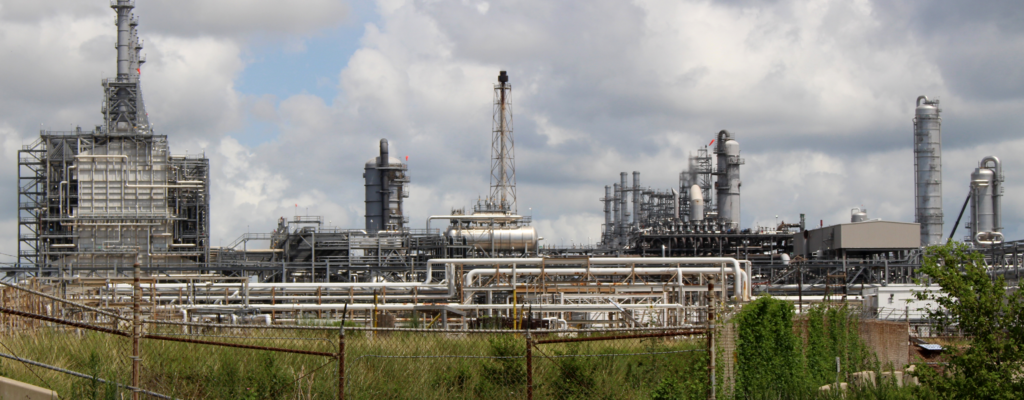
Generic safety software doesn’t work well in chemical manufacturing. The inspection requirements for a PSM-covered process unit are different from those for a utility corridor, a loading area, or a control room. Pre-task review requirements for work involving hazardous energy are different from those for routine maintenance.
Effective safety software in this environment needs to be configurable at a granular level. That means inspection checklists built around specific process units and equipment types. It means pre-job briefing forms that include the hazard identification and control verification steps required by your PSM procedures. It means hierarchy fields that tie every record to the right unit, building, and process area — so reporting can be filtered and analyzed at whatever level of granularity the EHS team needs.
Guardian’s form builder supports all of this. Forms are built collaboratively with the customer’s EHS team, reflecting actual procedures and workflows rather than generic templates. Conditional logic surfaces additional questions based on what the inspector or observer selects — so a finding of an at-risk condition automatically prompts for contributor classification and corrective action assignment. Required fields ensure that nothing critical gets skipped.
Action Item Tracking That Closes the Loop
In chemical manufacturing, the gap between identifying a hazard and resolving it is a regulatory and operational risk. OSHA PSM explicitly requires that action items from process hazard analyses, compliance audits, and incident investigations be tracked to resolution. That tracking requirement applies not just to formal PHA action items but to the corrective actions generated by day-to-day safety observations and inspections.
Paper-based and spreadsheet-based tracking systems fail this requirement regularly — not because organizations don’t intend to close action items, but because the tracking infrastructure isn’t reliable enough. Items get lost. Assignments aren’t clearly documented. Due dates pass without notification. The audit trail is incomplete.
Guardian ties action items directly to the observations and inspections that generate them. Each action item is assigned to a named individual with a due date and an automatic email notification. Managers see open items in a centralized list. Items can be assigned at the observation level or at the level of a specific finding within an inspection. When a regulator asks for documentation of corrective action tracking, the record is complete and traceable from finding to resolution.
Reporting That Supports Both Operations and Compliance
Chemical manufacturing EHS teams need two kinds of reporting. The first is operational: what is the current state of our safety program? Which locations are generating the most at-risk observations? What are the top contributors driving findings? Are inspection completion rates holding steady across all process units?
The second is compliance-oriented: can we demonstrate to a regulator that our safety management system is functioning as designed? Do we have documentation of all required inspections, pre-task reviews, and corrective actions for the audit period?
Guardian’s reporting engine produces both. Scheduled reports with trend analysis, contributor breakdowns, and observation counts give EHS leadership the operational visibility they need. The underlying data — timestamped, user-attributed, and permanently stored — provides the compliance documentation that holds up under audit.
For facilities that want raw data access, Guardian’s API supports Power BI and custom dashboards. Some customers pull inspection and observation data directly into their own reporting environments to build the specific views their safety leadership and operations teams need.
Getting Started Without Disrupting Active Operations
The practical challenge for chemical manufacturing facilities moving to digital safety documentation is the same as in any high-consequence environment: the work can’t stop, and the transition can’t create gaps in documentation or compliance.
Guardian’s implementation model is specifically designed to avoid this. New forms are built and tested in a QA environment before going live. Role-based access controls mean that forms in development aren’t visible to the broader user base until they’re ready. The transition from paper to digital happens form by form, starting with the highest-priority use cases and expanding from there.
Most facilities start with one or two inspection or observation forms, validate the workflow over a few weeks of parallel use, and then move those forms into production while beginning work on the next set. By the time the full program is live, the EHS team knows exactly how the system works and the field workers are already comfortable with the interface.
If you want to see what safety documentation looks like in a chemical manufacturing context — real inspection forms, real reporting dashboards, real data from production environments — download the Guardian Preview Pack. No demo required.
See Guardian in Action
Real dashboards and form examples from production environments — no demo required.